Bone Grafting Explained: Why It’s Sometimes Necessary Before Dental Implants
You have decided to replace a missing tooth, and then you learn that the area may need a bone graft first. If the gums have healed and the gap looks fine, you may wonder what still needs rebuilding. The answer lies beneath the gums, where the bone may have become too thin or too short to support an implant.
At Serenity Dental Studio in Frisco, Texas, Dr. Rita Kengskool and our team can examine that area and explain what we find. We offer bone grafting as part of preparing sites for tooth replacement. If you need a graft, we will walk through what it involves, how the area heals, and what happens before your new tooth is ready.
Why an Implant Needs Enough Bone
A dental implant replaces a missing tooth root. It sits within the jawbone, which bonds with the implant as the area heals. That connection provides support for the replacement tooth when you bite and chew.
For this to work, the implant needs enough bone around it in the right location. You may have room for a tooth above the gums while the bone underneath is too narrow to hold the implant securely. Imaging helps us see the width, height, and shape of that bone before treatment.
We also consider where the replacement tooth needs to sit. For example, a back tooth needs support for chewing, while a front tooth needs careful planning around the gumline and neighboring teeth. If the available bone cannot support the planned implant position, a graft may help rebuild the area.
Bone Can Shrink After a Tooth Is Lost
The bone surrounding a tooth responds to the forces passed through its root during chewing. Once the tooth is removed, that stimulation changes, and the bone begins to reshape. As the socket heals, the area can lose width and height.
You may hear us call this area the ridge, meaning the raised section of jawbone that holds the teeth. If a tooth has been missing for years, that ridge may have narrowed beneath an otherwise healthy-looking gumline. You might notice a slight hollow in the gums, or you may only learn about the change when you start planning an implant.
Gum disease, infection, and injury can also leave bone missing before a tooth is removed. Because of that, two similar-looking gaps may need different preparation. We assess your site to determine whether enough bone remains and where additional support may be needed.
What a Bone Graft Does
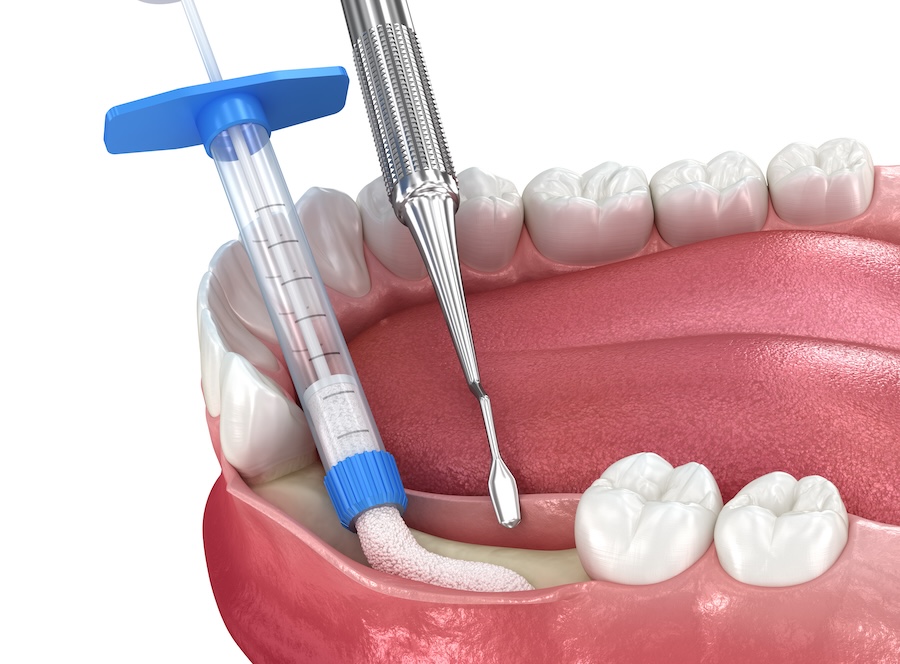
During grafting, bone or a bone substitute is placed where additional bone is needed. The material provides a framework that supports new bone growth as your body heals. Over time, the site changes as new bone develops and the graft material remodels.
Graft materials can come from your own bone, processed human donor bone, animal-derived material, or synthetic sources. The choice depends on the procedure and your needs. If you have questions or preferences about the source, ask us before treatment so we can explain the proposed material.
A protective membrane—a thin covering placed over the graft—may also be used. It helps protect the area and keep faster-growing gum tissue from moving into the space intended for bone growth. Stitches then help hold the gum tissue in place while the site begins healing.
Grafting When a Tooth Is Removed
If you are planning an implant, discuss it with us before the tooth is extracted. In some cases, we can place graft material into the socket, the space left behind by the roots. This is called socket preservation, and it helps limit how much the area shrinks during healing.
The graft stays beneath the healing gum tissue while bone develops. During that time, you will need to protect the site from pressure and follow your cleaning instructions. We will explain what you can eat and how to care for the surrounding teeth.
Socket preservation may reduce the rebuilding needed later, although some sites still require additional grafting. Once the area has healed, we reassess the bone before moving ahead with an implant. That follow-up helps determine whether the site is ready or needs more preparation.
Rebuilding a Gap That Has Already Healed
You can still be assessed for grafting if your tooth was removed months or years ago. When the ridge has become narrow, graft material may help increase its width. A larger area of bone loss may require a more involved procedure and a longer healing period.
In the upper back jaw, the nearby sinus can also limit the available bone. The sinus is an air-filled space above the roots of the upper back teeth. If too little bone remains beneath it, a sinus lift may be considered to create room for graft material and future implant support.
We can explain whether your site needs a small graft or a more extensive procedure. Some cases may require care with a specialist, depending on the location and amount of rebuilding needed. We will review that arrangement with you as part of planning treatment.
What Recovery May Feel Like
After grafting, you may have tenderness, swelling, and stitches near the site. How much you notice depends on the size and location of the procedure. A small socket graft can have a different recovery from rebuilding a larger section of the ridge.
At first, you may need softer foods and adjustments to how you clean near the area. We will give you instructions for brushing, rinsing, medications, and avoiding pressure on the graft. If you wear a removable denture or temporary tooth, its fit may need attention so it does not press against the healing site.
Early soreness generally improves before the bone has finished developing. The gums can look healed while the deeper area still needs several months to mature. However, increasing pain or swelling, fever, or other concerning changes should be reported to the team treating you.
Smoking can interfere with healing, and certain health conditions or medications can affect the treatment plan. Before surgery, we review your health history and discuss those factors. Keep us updated if your health or prescriptions change during the healing period.
When the Implant Can Be Placed
Sometimes a graft and implant can be placed during the same appointment. This depends partly on whether the existing bone can hold the implant firmly while everything heals. Other sites need the graft to develop first, followed by implant placement at a later visit.
If a separate healing period is needed, ask what you can wear in the meantime. A missing front tooth may make you more concerned about appearance, while a back-tooth gap may affect chewing. We can discuss temporary replacement options and how to protect the graft beneath them.
After implant placement, the implant also needs time to bond with the bone before the final tooth is attached. Your schedule may therefore include grafting, follow-up visits, implant placement, and the final crown. We will explain the expected stages so you can plan around work, travel, and everyday commitments.
Bone Graft Planning in Frisco, Texas
If you are considering an implant or preparing to have a tooth removed, schedule a consultation with us at Serenity Dental Studio. Dr. Rita Kengskool can assess the area and explain whether grafting would help prepare it for replacement. Bring your questions about healing, graft materials, temporary teeth, and the cost of each stage.
You can also come in if you have been living with a gap for years and are ready to explore replacing it. We will look at the bone that remains and walk through the options for your mouth. We look forward to helping you get that missing tooth back into your smile—and back to work when you chew!